Repro Japan
What Is Cosplay Photography?
(This was an essay for the Williams College Museum of Art’s show, Repro Japan in 2022. I had work in the show but also helped curate the contemporary photography and media section. This appeared in the show catalog.)
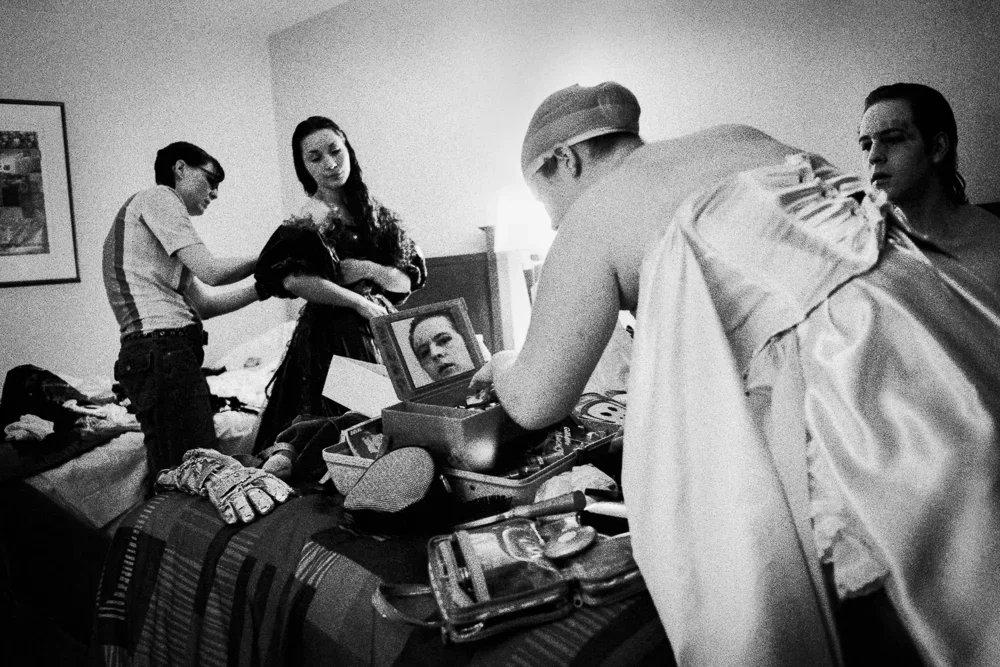
I’m removing my pants in a hotel room while a crying stranger works a sewing machine next to me. My hair is sprayed bright blue. A woman stuffs her bra on the bed while a man with pantyhose mashing his hair lies on the divan while doing elaborate makeup. I take a photo, which ends up in an expensive frame in a gallery exhibition 2000 miles away.
Let me start again.
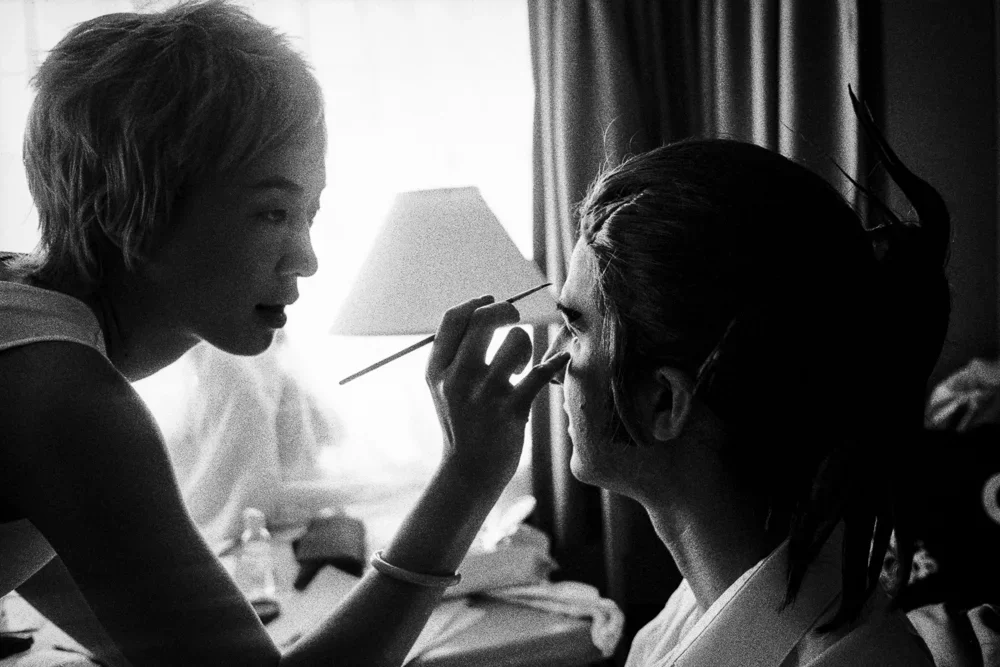
I am at Anime Central, a fan convention in a suburban mega-hotel outside Chicago. An old friend from my anime club grabs me as an emergency substitute to join their group cosplaying as characters from Paradise Kiss. They are already late and are disqualified from winning a prize. Everyone is crushed, but we still finish dressing out of pride. While we are getting ready, I shoot some photos that everyone will cherish for depicting the hidden labor behind their passion.
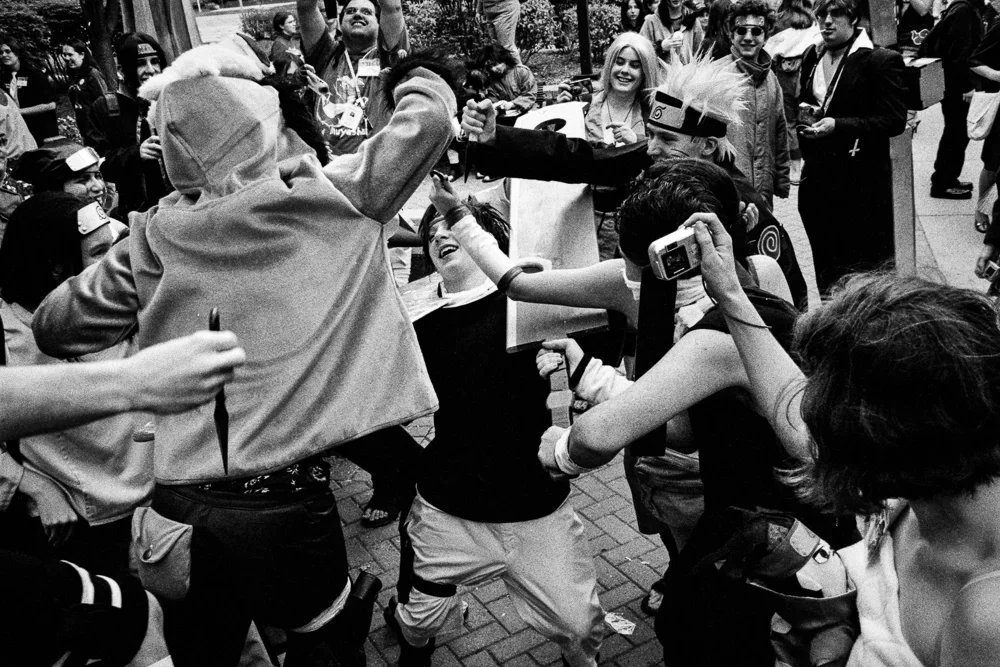
“Cosplay photography” seems so easy to define that, at first glance, it looks like a tautology. A photograph of someone in a costume depicting an anime, manga, or video game character is a cosplay photograph. Case closed. But under scrutiny, a single "simple" photo fractures into shards that reflect different modes of making and different cultural contexts. Reading a cosplay photograph means following all the numerous strands that connect it to other nodes in its wider communication network.
For example, is a photo of someone in a punk outfit a cosplay photograph? What about a photo of the same person dressed as the infamous punk, Sid Vicious? What if they were wearing a recreation of Sid Vicious’s outfit from the movie Sid and Nancy? Where, precisely, is the delineation between that and a photo of someone dressed as Nagase Arashi, the Japanese fashion student character who features in Paradise Kiss, whose outfit and look are a paean to Vivienne Westwood and that same historical punk aesthetic?
These questions investigate only a single photograph and its subject. But as art critic Taco Hidde Bakker points out in The Photograph that Took the Place of the Mountain, photography is but one part of a broader system of imaging and reproduction technologies, including those featured throughout this exhibit, and as such always has to be read in a context of its production and circulation. For an example of these subtle complexities that influence reading an image, let’s take two photographs, one by Joseph Chi Lin and another by Elena Dorfman, that seem materially similar at a first glance but are functionally and affectively quite different.
Joseph Chi Lin is a professional photographer whose photographs of cosplay are colorful and clear, with the subject framed to be seen. Lin has deep connections in the cosplay world, and this type of image circulates primarily amongst cosplayers and fans. Lin’s use of wrapping natural light, subtle camera techniques, and naturalistic backgrounds collaborate with the cosplayer’s performance. Together they craft a fictional world for the character depicted and simultaneously showcase the workmanship of the costume itself.
Elena Dorfman is also a professional photographer, and her image in the exhibit is richly colored, clearly rendered, and framed to emphasize the cosplayer. Her work is displayed in a fine art gallery context, with other of her projects ranging from a series of rock quarry landscapes to portraits of men who have relationships with realistic sex dolls. In Dorfman’s photographs, the cosplay subject is isolated on a dark backdrop, strobes cast sharp light from the sides, and the poses are restrained. These photographs are not building fictional worlds with the cosplayer (like Lin’s images), but instead leverage similar photographic technologies and techniques to introduce dissonance between character and cosplayer, drawing attention to details that highlight the abject boundary between reality and fiction.
Frequently the context for photographs, especially photographs of cosplay, involves multilayered cultural exchanges. Maggie Wei Wu's essay on 19th-century touristic photography elsewhere in this publication describes how Japanese subjects, often women, were captured in images by male foreign photographers. It is hard to talk about cosplay photography without touching on these same complexities: the cross-cultural gazes and subject positions (often Orientalist and gendered) inherited in this genre of image-making. But as Henry Jenkins has discussed in his classic essay, "Star Trek Rerun, Reread, Rewritten," fandoms are also capable of queering and critiquing the traditions they engage and play with. Multi-disciplinary Japanese artist Nitadori Miki, a self-described migrant, serves as a counterpoint and a connecting thread linking these complex cosplay photographs with the deep history presented in the rest of the exhibit. In her Odyssey: Reflect project, which combines archival Japanese photography with Japanese and western textiles, she introduces new contexts for historically potent visual media. These works emphasize the inherent tension between image and material: the cloth’s makers and its transport, the photograph handled tenderly by someone and then handed on to someone else to use.
These questions of cultural exchange and gaze are not academic by any means. Returning to our question of what is or isn’t a cosplay photograph, how does it affect our decision and subsequent reading if the hypothetical dressed-up Sid Vicious subject is identified as Japanese or as British? In Tokyo or just outside Chicago? If he (or she) is photographed on the street or at an anime convention? What if it is an image of Arashi (the punk character from Paradise Kiss) cosplaying as Sid Vicious?
Whichever of these images we identify as “cosplay photography,” all of their multilayered visual performances and contexts resonate through the vast structure of visual communication attached to cosplay photography. This includes our role as viewers. Whether your hair is spayed blue, whether you hold a worn camera, whether you are looking at images of cosplayers in a museum or on your phone, cosplay photography—maybe “cosplay photographies” is a better term—fractures our usual relationships with images, letting us glimpse our active, intertwined relationships with the images that haunt our media-saturated lives.